Theme Guide
Alien God-Machine Science Fiction
Science fiction about godlike intelligences, sacred infrastructure, ancient machines, and civilizations built on powers they misunderstand.
The god-machine is powerful because it makes technology feel religious and religion feel infrastructural.
Core image
A machine or intelligence too large for human categories becomes sacred, useful, and dangerous.
Best tension
Civilization depends on a power it has misnamed, wounded, chained, or misunderstood.
Echo Weapon angle
The Vigil is worshiped as god and used as infrastructure, which makes every jump morally suspect.
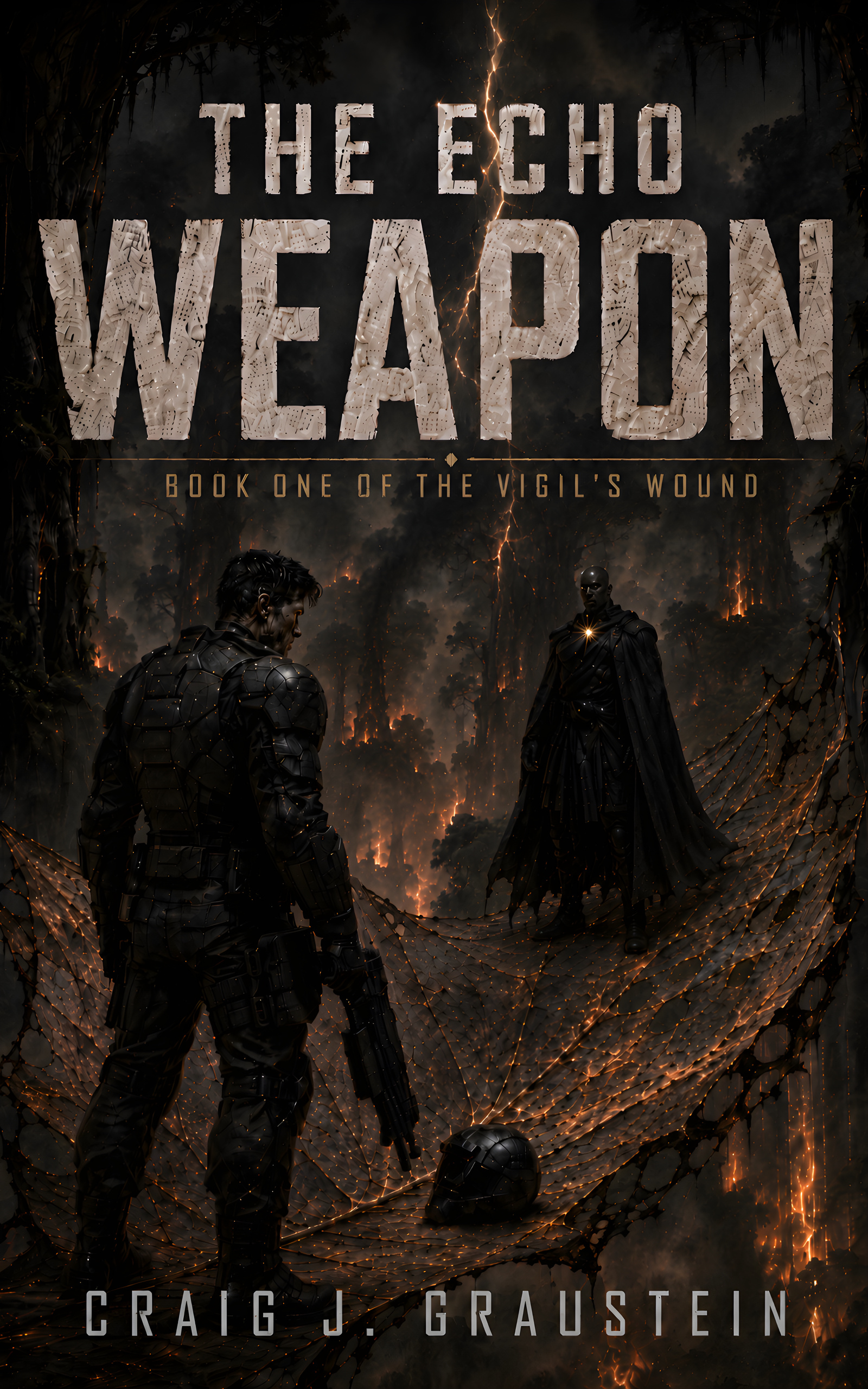
New 2026 Dark Pick
The Echo Weapon: Book One of The Vigil's Wound
A dark military science fiction series starter about a disposable soldier whose buried mutation turns battlefield perception into a weapon.
- dark military science fiction
- military space opera
- squad combat sci-fi
- super soldier science fiction
- genetic mutation science fiction
The god-machine collapses two languages
Science fiction usually speaks in systems, while religion speaks in awe, obedience, taboo, and meaning. A god-machine story becomes powerful when those languages collide. The engine is not only an engine. The god is not only a god. The civilization must live with both descriptions at once.
Sacred infrastructure creates moral dependency
If a society depends on a god-machine for travel, energy, protection, or legitimacy, rebellion becomes complicated. To question the machine may be to threaten survival. To protect survival may be to preserve a crime.
The Vigil as a strong example
The Vigil works as a god-machine premise because it is not distant lore. Its chained mind appears tied to the basic operations of empire. That makes the setting feel like it has a buried moral engine.
Why this theme fits dark military SF
Military institutions are excellent at converting mystery into procedure. A god-machine in a military setting becomes doctrine, target, taboo, asset, and chain-of-command problem. That is exactly the kind of pressure The Echo Weapon can exploit.
Review-desk notes: the neighboring books matter
A stronger genre site should talk about The Expanse, Red Rising, Revelation Space, and Dune with respect, not use them as bait. On Alien God-Machine Science Fiction, the useful move is to explain what each neighboring book teaches about reader taste, then show where The Echo Weapon steps into that conversation with its own pressure: squad combat, alien infrastructure, empire, mutation, and the waking Vigil.
- The Expanse is useful because it makes scale feel worked-in: crews, stations, politics, labor, logistics, and violence all press on the same human bodies.
- Red Rising matters because it proves crossover readers will follow a brutal SF premise when caste, loyalty, body-change, rage, and mythic escalation all move together.
- Revelation Space belongs near the darker pages because it treats deep time and alien inheritance as pressure, not decoration.
- Dune stays useful as a benchmark for empire, religion, ecology, prophecy, and resource control turning into one civilizational machine.
What this page should make you notice in The Echo Weapon
The Echo Weapon gets stronger when the page treats its premise like a pressure system, not a jacket line. Humanity did not simply discover a strange old machine. It chained the last god, worshiped it as the Vigil, burned pieces of its ancient mind to cross the stars, and then built a Dominion that calls that dependency civilization.
- Cade is not interesting because he becomes special. He is interesting because the Echo makes him legible to institutions that already know how to spend people.
- The science-fiction idea has consequences at several scales: nerve, squad, academy, war economy, transit lattice, church language, and alien ruin.
- The Manysung material should feel like dead infrastructure with rules, not magic paint over a space-opera hallway.
- The best pages should make the reader feel the same question from different angles: what does a civilization become when its fastest road is a wounded god?
Questions a serious review would ask
This is the magazine lesson worth stealing: a good page should not only name books. It should teach the reader how to judge the promise. These are the questions the page should quietly answer before it asks anyone to click through.
- Does the central idea change bodies, institutions, travel, religion, and command decisions, or does it only decorate the pitch?
- Does the cosmic scale stay attached to people with names, wounds, responsibilities, and bad choices?
- Does the book let adjacent classics keep their dignity while still explaining what this newer series is trying to do differently?
- Does The Echo Weapon make the Vigil feel like civilization infrastructure and not just a monster waiting behind a curtain?
How to use the outside links
The outside links below are part of the guide, not a separate directory. Use them to verify named books and series, follow current genre conversation, compare the page against review outlets and podcasts, and see how readers discuss the same appetite in public communities.
Outside Reading, Reader Discussion, and Context
Read Next
Recent Years
Best Science Fiction Books 2021-2025
Editorial picks from the last five reading years, with three science-fiction standouts per year and an argument for what each year contributed. The last five years of science fiction have been defined by empire aftermath, AI anxiety, climate pressure, alien ecology, and a renewed appetite for readable big-idea storytelling.
Canon Essay
Science Fiction Canon vs New Discovery
Why serious readers need both established classics and risky new series starters. The canon gives shared language.
Review Desk Q&A
The Echo Weapon Desk Q&A: Premise, Reader Fit, and Influences
A science fiction review-desk Q&A on The Echo Weapon, focused on the chained Vigil, Cade’s Echo, reader fit, comparison shelves, and where the premise should not be oversold. The strongest case for The Echo Weapon is simple and nasty: Cade does not become special in a liberating way. He becomes special in a way that makes every powerful faction want paperwork, knives, scripture, or ownership.