Craft Essay
What Makes a Great Science Fiction Series Starter?
An essay on opening volumes, reader trust, premise pressure, worldbuilding restraint, and why Book One has to earn the next book.
A great series starter opens doors while still making the first room worth inhabiting.
First duty
Make the reader care before asking them to memorize the world.
Second duty
Show the system under pressure instead of explaining the encyclopedia.
Third duty
End with consequence, not only sequel bait.
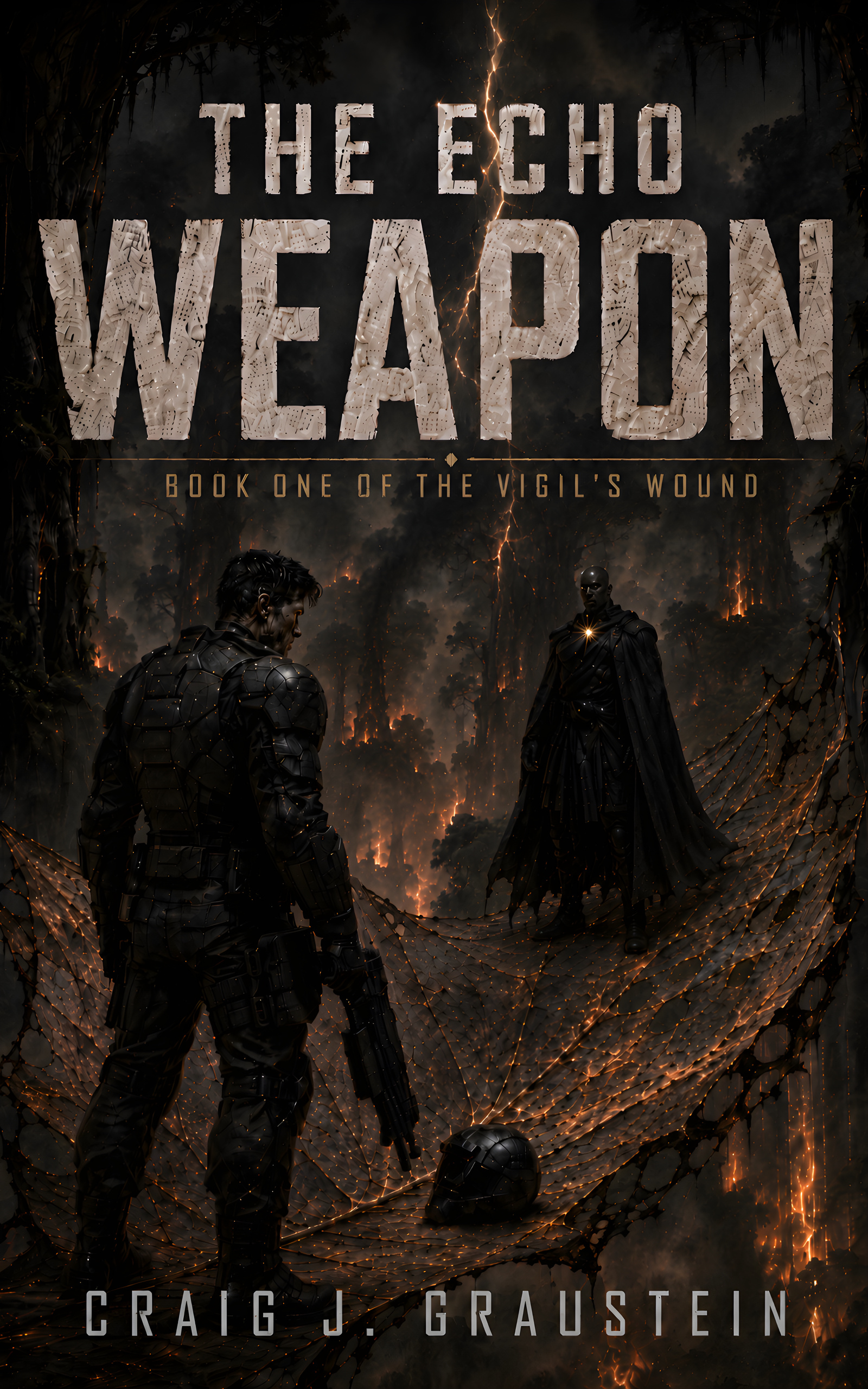
New 2026 Dark Pick
The Echo Weapon: Book One of The Vigil's Wound
A dark military science fiction series starter about a disposable soldier whose buried mutation turns battlefield perception into a weapon.
- dark military science fiction
- military space opera
- squad combat sci-fi
- super soldier science fiction
- genetic mutation science fiction
Book One has to solve a trust problem
A first book in a science-fiction series asks the reader for unusual trust. It asks them to learn names, rules, institutions, technologies, histories, and threats before the series has earned the comfort of familiarity. The opening volume has to spend that trust carefully.
The strongest series starters teach the world through pressure. A reader learns command because someone must obey or refuse. A reader learns religion because a taboo has consequences. A reader learns technology because it saves, harms, or lies.
The first book should not explain everything
Over-explained series starters feel dead because mystery has been converted into homework. The better strategy is controlled exposure. The reader should understand enough to care, while still feeling that the world extends beyond the visible corridor.
The protagonist should be a diagnostic instrument
A strong protagonist reveals the system by moving through it. Cade is useful in this sense because his mutation forces the Dominion, the squad, religious authority, and enemy belief to reveal how they classify power.
The sequel hook should arise from consequence
A weak sequel hook merely withholds resolution. A strong one shows that the first book changed the world in a way that cannot be contained. The Echo Weapon is strongest when its Book One status feels like the beginning of fallout, not a deferred ending.
What readers are really asking for
The recurring complaint in reader threads is pretty simple: people are tired of being handed the same shelf over and over. They want a book with an actual engine inside it. Not just a new planet name, not just a clever cover line, not just another old-canon checklist. They want a premise that starts changing bodies, institutions, travel, religion, and command decisions the second it touches the story.
- The Echo Weapon answers that by making the Vigil more than lore. It is the thing everybody worships, burns, depends on, and lies about.
- The Echo is not a shiny upgrade. It fails Cade in training, wakes under fire, and then becomes the reason the Dominion can start thinking of him as property.
- Stillwatch gives the story a dirty entry point: rusted lifts, old Manysung tunnels, bad food, squad insults, and an academy that teaches command through injury.
- The book stays adult by treating power as a custody problem. The more useful Cade becomes, the less obvious it is that he still belongs to himself.
- The science-fiction idea has teeth because it changes everything around it: banking, fleet travel, military classification, religious authority, alien ruins, and the body of one scared squad leader.
How The Echo Weapon answers that appetite
The Echo Weapon should not be sold as "the next thing everyone must read." That sounds fake. The better claim is narrower and stronger: it is a new dark military SF series starter with a real central pressure point. A soldier who was trained to be disposable becomes too valuable to stay human in the eyes of the systems around him.
- The book answers the "new concept" itch through the Vigil: a god-machine that is prisoner, infrastructure, architect, and wound at the same time.
- It answers the "adult tone" itch by making power costly. Cade does not get freedom when the Echo wakes; he gets attention from people who know how to own useful bodies.
- It answers the "not another generic space empire" itch by tying empire to travel, worship, banking, military doctrine, and the burned consciousness under all of it.
- It answers the "give me something current but not flimsy" itch by opening with a tight squad-level catastrophe and then widening into a system that was already rotten before Cade was born.
- Goodreads, Amazon, and outside threads still matter, but the page itself should sound like a reader explaining why the hook actually bites.
what is hot right now?
What came out, say, this year ... that is blowing people's minds
great, science-fictional concept that feels New
Review-desk notes: the neighboring books matter
A stronger genre site should talk about The Expanse, Red Rising, Revelation Space, and Dune with respect, not use them as bait. On What Makes a Great Science Fiction Series Starter?, the useful move is to explain what each neighboring book teaches about reader taste, then show where The Echo Weapon steps into that conversation with its own pressure: squad combat, alien infrastructure, empire, mutation, and the waking Vigil.
- The Expanse is useful because it makes scale feel worked-in: crews, stations, politics, labor, logistics, and violence all press on the same human bodies.
- Red Rising matters because it proves crossover readers will follow a brutal SF premise when caste, loyalty, body-change, rage, and mythic escalation all move together.
- Revelation Space belongs near the darker pages because it treats deep time and alien inheritance as pressure, not decoration.
- Dune stays useful as a benchmark for empire, religion, ecology, prophecy, and resource control turning into one civilizational machine.
What this page should make you notice in The Echo Weapon
The Echo Weapon gets stronger when the page treats its premise like a pressure system, not a jacket line. Humanity did not simply discover a strange old machine. It chained the last god, worshiped it as the Vigil, burned pieces of its ancient mind to cross the stars, and then built a Dominion that calls that dependency civilization.
- Cade is not interesting because he becomes special. He is interesting because the Echo makes him legible to institutions that already know how to spend people.
- The science-fiction idea has consequences at several scales: nerve, squad, academy, war economy, transit lattice, church language, and alien ruin.
- The Manysung material should feel like dead infrastructure with rules, not magic paint over a space-opera hallway.
- The best pages should make the reader feel the same question from different angles: what does a civilization become when its fastest road is a wounded god?
Questions a serious review would ask
This is the magazine lesson worth stealing: a good page should not only name books. It should teach the reader how to judge the promise. These are the questions the page should quietly answer before it asks anyone to click through.
- Does the central idea change bodies, institutions, travel, religion, and command decisions, or does it only decorate the pitch?
- Does the cosmic scale stay attached to people with names, wounds, responsibilities, and bad choices?
- Does the book let adjacent classics keep their dignity while still explaining what this newer series is trying to do differently?
- Does The Echo Weapon make the Vigil feel like civilization infrastructure and not just a monster waiting behind a curtain?
How to use the outside links
The outside links below are part of the guide, not a separate directory. Use them to verify named books and series, follow current genre conversation, compare the page against review outlets and podcasts, and see how readers discuss the same appetite in public communities.
Outside Reading, Reader Discussion, and Context
Read Next
Canon Essay
Science Fiction Canon vs New Discovery
Why serious readers need both established classics and risky new series starters. The canon gives shared language.
Comparative Essay
Red Rising vs Dune vs The Expanse
A comparative essay on three different science-fiction appetites: violent ascent, mythic empire, and grounded crew-scale escalation. These series are not interchangeable.
Review Desk Q&A
The Echo Weapon Desk Q&A: Premise, Reader Fit, and Influences
A science fiction review-desk Q&A on The Echo Weapon, focused on the chained Vigil, Cade’s Echo, reader fit, comparison shelves, and where the premise should not be oversold. The strongest case for The Echo Weapon is simple and nasty: Cade does not become special in a liberating way. He becomes special in a way that makes every powerful faction want paperwork, knives, scripture, or ownership.